
I Was Using the Wrong Bedding for My Mouse for a Year — Here's What Changed Everything
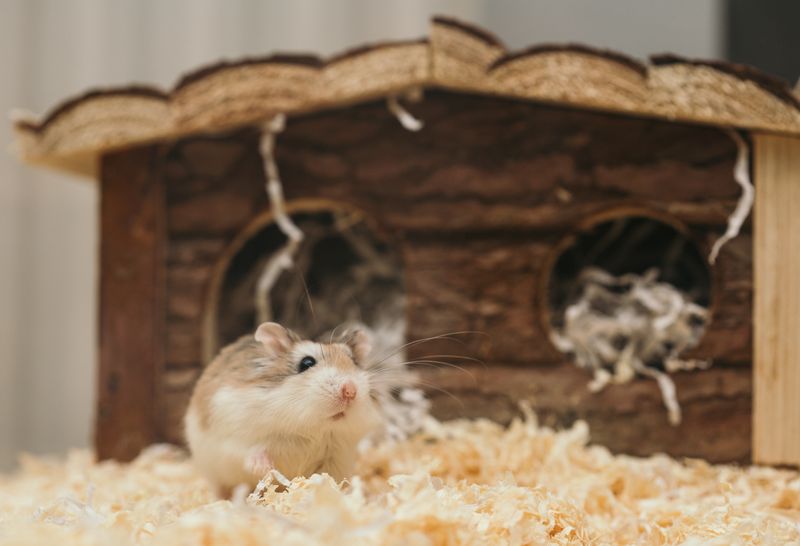
My mouse Pip's cage started to smell within twelve hours of a full clean, and I mean smell, not "hmm, a bit mousy" but the kind of eye-watering ammonia smell that hits you when you walk into the room. I was changing the bedding every other day and it barely helped. Then Pip started sneezing. Not occasionally, but in little fits, and I finally connected the two things I'd been treating as separate: the smell and the sneezing were the same problem, and the problem was the bedding.
I had assumed bedding was just the fluffy stuff at the bottom of the cage. I'd bought whatever was cheapest, refilled it, and thought that was the whole job. What I didn't understand was that for a mouse, bedding isn't decoration. It's the floor, the nest, the burrow, and, unfortunately, the air they breathe every second of the day.
Why This Happens
Mice have extraordinarily sensitive respiratory systems, and their noses are inches from the bedding at all times. Two categories of bedding cause most of the trouble. The first is aromatic softwood shavings. Cedar and, to a lesser degree, pine. Those woods release aromatic oils that smell nice to us and are genuinely harmful to a small rodent's lungs, causing irritation and contributing to chronic respiratory disease. It's a common mistake because cedar is marketed as a pet bedding and it does control odor well. The very thing that's making you reach for it is what's hurting your mouse.
The second problem is dust and ammonia. A dusty bedding irritates the airway directly, and any bedding that isn't managing urine well lets ammonia build up, which is both a smell and a lung irritant. Mice also have a strong instinct to burrow, and a thin layer of bedding denies them that. A mouse with deep bedding can dig tunnels and nest, which is core to its wellbeing; a mouse with an inch of fluff on a bare tray has nowhere to hide and nothing to do.
So a good bedding has to hit several targets at once: low dust, low aromatic oil, strong at controlling odor, and something a mouse can actually tunnel into. Once I started buying for all four of those instead of just "cheap and fluffy," the smell and the sneezing both started to resolve, and the behavioral change in Pip, more activity, more building, was immediate and obvious.
What I Tried First — and Why It Didn't Work
I started, like a lot of people, with cedar shavings because they smelled good and controlled odor. That was almost certainly making Pip's respiratory issues worse, and I want to name it clearly so nobody repeats it. Cedar and pine aren't neutral; they're actively bad for rodents.
Then I tried scented paper bedding, figuring the fragrance would help the smell. It doesn't, it masks ammonia for an hour and adds perfume the mouse has to breathe. Pip's sneezing didn't improve at all.
I also tried cotton fluff, the kind sold for nesting, and had a genuine scare when I realized how easily that material can wrap around a limb or get swallowed and cause an impaction. I pulled it out and never went back.
And I tried plain paper towels, which are unscented and safe but flat. No burrowing structure, and terrible at holding back ammonia. The cage smelled worse, not better, and Pip had nothing to nest in.
What Actually Worked
The fix was switching to a proper low-dust paper-based bedding laid deep, several inches of it, and then changing how I maintained the cage. Deep bedding lets the urine distribute and dry instead of pooling in a wet spot that turns straight into ammonia, and it gives the mouse a real burrow. I stop removing all of it every day; instead I spot-clean the soiled corners daily and do a full change less often, which keeps the nest structure intact and keeps the smell down. Combined with better ventilation, that ended the twelve-hour stink.
Two pieces of gear made the maintenance part dramatically easier. For deep cleans, I used the FXW AuraSpace Clear Acrylic Indoor Dog Playpen as a temporary, escape-proof play area to park Pip while I stripped and scrubbed the cage. Because the panels are clear and modular, I could build a small enclosure that let me keep an eye on him while my hands were full of soiled bedding, and it wipe-cleans in seconds, which matters when you're doing this weekly and don't want to add another smelly surface to the rotation. It also doubles as a safe floor-time zone so he's not loose in a room where a cat or a dropped object is a risk.
The second piece was keeping all of it behind a barrier. I set up the COMOMY 36" Extra Tall Baby Gate to close off the room where the cage lives, so the resident cat can't get near the mouse's space when I'm mid-change or when the playpen is in use. A gate solves the low-tech problem that causes most mouse disasters: a cat, a dog, or a person walking through the area at the wrong moment. With Pip's cage deep-bedded in safe paper, his air clean, and the room contained behind a gate, the sneezing has basically stopped and the room smells like nothing at all.
Orthopedic Pet Bed
A wipe-clean, escape-proof play area to park your mouse safely during deep cage cleans (and a contained zone for floor time.)
Check price on AmazonPet Ramp & Steps
A tall gate that closes off the room so the cat, dog, or a careless foot never reaches your mouse's space mid-change.
Check price on AmazonWhat I'd Tell Someone Starting Today
Throw out the cedar and pine shavings today, and don't replace them with anything scented. Buy an unscented, low-dust paper bedding and lay it deep, three to four inches if the cage allows, because deep bedding is what controls ammonia and satisfies the burrowing instinct at the same time. Spot-clean daily and do full changes less often, and if the room still smells, that's your signal that ventilation or bedding depth needs work, not more perfume.
Watch the sneezing, because a mouse that sneezes in fits is telling you something is wrong with its environment, and that usually means the bedding. And keep other pets out of the area with a barrier rather than trust, since the average mouse emergency is caused by an animal or a person who was only there for a second. Get the air right and the rest follows.
This post may contain affiliate links. If you buy through one of them, we earn a small commission at no extra cost to you.