
My First Nano Terrarium Almost Killed Its Resident (Here's the Small Setup That Actually Works)
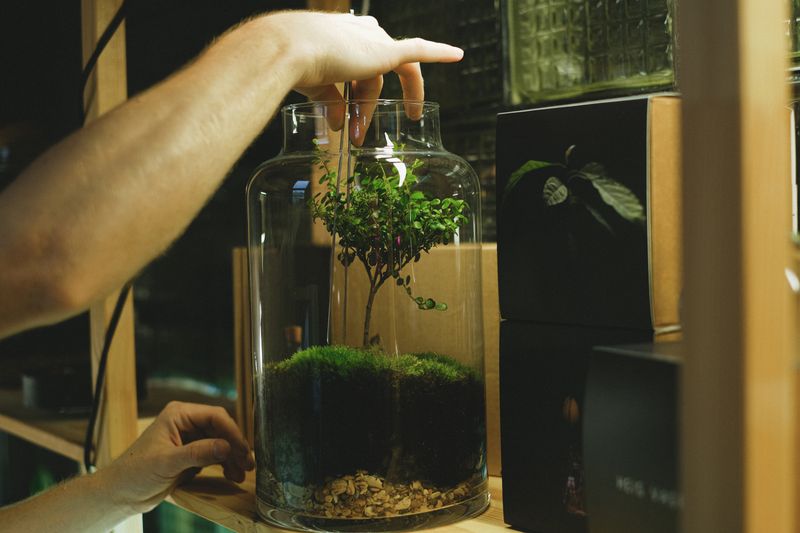
I live in a small apartment, so a nano terrarium was the obvious choice. A neat little glass cube on my desk, a tiny inhabitant, a living decoration I could actually maintain. That was the fantasy. The reality was a box that swung from too hot to too cold every time the sun moved, dried out in a single afternoon, and left its resident pressed into a corner panting. I learned the hard way that "small" does not mean "easy" with a terrarium. It means the exact opposite, because a small volume of air and substrate has no buffer. Every mistake in a big tank happens faster and harder in a tiny one.
What I had built was not a habitat. It was a trap with dirt in it. Fixing it taught me the specific rules that make a nano setup work instead of fail, and once I understood why small enclosures behave the way they do, the whole thing became genuinely low-maintenance.
Why This Happens
The core problem with a nano terrarium is thermal mass, which is just a fancy way of saying a small space cannot hold onto heat or moisture. A large enclosure is sluggish, it takes a while to heat up and a while to cool down, which smooths out the swing between day and night. A small enclosure reacts instantly. Turn off the lamp and the temperature drops within minutes. Add a little water and it spikes humid, then it dries out fast. The keeper is not doing anything wrong on purpose; they are just fighting physics with a volume too small to be stable.
That instability is why tiny setups are genuinely harder than big ones, and why most beginner guidance that applies to a four-foot tank does not transfer down. A basking lamp sized for a large enclosure will cook a nano one. A heat mat meant to warm a corner will overheat the whole floor of a small tank. And because the animal cannot escape the conditions, every swing lands directly on it, which is how you get stress, refusal to eat, and eventually illness.
The second trap is habitat size relative to the animal. Pet stores sell tiny glass cubes as "starter kits," but a nano enclosure that is right for a very small invertebrate is a prison for a small lizard or a juvenile reptile. The animal needs room to move between a warm side and a cool side, and room to find a humidity pocket, and a nano tank so crowded with decor that there is nowhere to travel is not enrichment, it is a stress box. The size has to match the specimen, not the shelf it looks nice on.
What I Tried First — and Why It Didn't Work
My first approach was to run the same equipment people use on large tanks. I put in a heat lamp at a distance meant for a big enclosure and a heat mat across most of the floor, and I cooked the little tank in an afternoon. The temperature on the basking side went far past safe, and I realized within a day that I had brought a flamethrower to a candle problem.
Then I tried misting heavily to hold humidity, spraying the whole thing down morning and night. It spiked the humidity for an hour and then dropped just as fast, and the constant wetness on the substrate started to smell sour and grow fuzzy things I did not want near a small animal's skin. Dumping water in to fix a dryness problem is like fixing a diet with a bingeing habit, the average looks fine, the swings are what hurt.
The third thing I tried was crowding it with decor to give the animal "things to do." Bright, busy, packed. What I actually did was remove the open floor space the animal needed to thermoregulate and trap humid air in pockets against the glass, which is close to the opposite of what a nano resident needs. Small and careful beats small and cluttered every time.
What Actually Worked
The fix started with equipment sized for the job. I swapped the oversized lamp for a smaller, lower-wattage heat source and set it on a thermostat so it cycles to hold a target temperature instead of blasting heat. A thermostat is the single most important device in a nano setup, because it does the constant micro-adjusting a small volume demands and lets the keeper stop babysitting the dial. I also reduced the heat mat to cover only part of the floor, so there is always a cool zone the animal can retreat to instead of being forced to sit on heat all day.
For humidity, I stopped spraying wildly and built in a moisture reservoir instead. A proper terrarium kit gives you the layers that regulate this almost on their own: a drainage layer of pebbles at the bottom, a barrier to keep soil out of it, and a moisture-holding substrate blend above. That structure lets the enclosure hold humidity steadily rather than swinging every time I mist, and it gives the animal a damp microclimate to find when it wants one and a drier area when it does not. Right after that, I sized the enclosure to the animal honestly, a species that needs to travel should not be in a cube, and a true nano resident should not be in a tiny tank crowded with decoration.
The last piece was simplifying. I put in a proper water dish, a piece of cover to hide under, and a little open floor to move across, and I left it at that. A nano terrarium done right is calm to look at because it is calm to be in. Once the thermostat was holding the temperature steady and the substrate was managing moisture, I barely touched the setup. I check it daily, adjust through the seasons, and clean as needed, and the animal in it is active, eating, and no longer pressed into a corner. Small did not have to mean delicate, once I stopped fighting the physics and set up around them.
Terrarium Kit with Live Moss & Springtails
The layered base that lets a tiny enclosure hold moisture steadily instead of swinging every time you mist.
Check price on AmazonGlass Terrarium with Drainage Layer
The device that does the micro-adjusting a nano tank demands (sized small and set on a thermostat, never blasted flat out.)
Check price on AmazonWhat I'd Tell Someone Starting Today
If you want a nano terrarium, accept up front that small means fast, and set up to hold conditions steady rather than reacting to swings. Put your heat source on a thermostat, leave a real cool zone, build a layered substrate so moisture self-regulates, and match the enclosure size to the animal honestly instead of to what looks tidy. Keep the decor simple, give the animal open floor to thermoregulate and cover to hide, and check temperature and humidity daily until you know your setup's rhythm. Do that, and a nano tank is genuinely easy. Skip it, and it will punish you in a way a big tank never would.
My little cube is still on my desk, and it is finally what I imagined on day one, quiet, stable, and green. The resident just needed me to stop treating a small space like a big one.
This post may contain affiliate links. If you buy through one of them, we earn a small commission at no extra cost to you.