
I Set Up My Reptile Terrarium Wrong the First Time — Here's How the Heat Gradient Fixed It
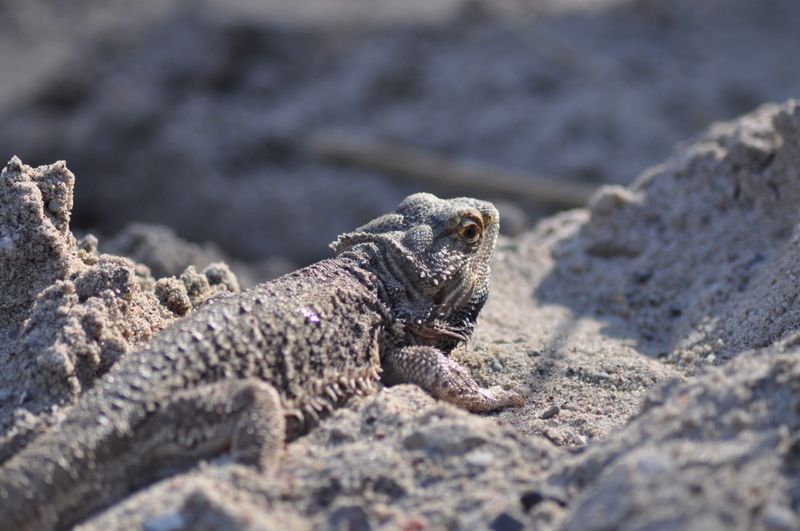
My first real terrarium was a cheap glass box with a screen lid, a heat lamp clamped to one corner, and a reptile in it who spent all day flattened against the cool glass, pressed as far from the lamp as the walls allowed. I thought he was shy. Then I noticed he never basked, barely ate, and hid constantly. I had built what looked like a proper setup and was confused that my animal clearly hated it. The problem was not the animal. It was that I had created a box with one temperature in it, and a reptile needs a range of them to live in.
This is the concept that took me a full setup and a worried vet visit to understand: a terrarium is not a room to keep a reptile warm in. It is a picture the animal thermoregulates itself across. Miss that, and everything else, the heat, the humidity, the feeding. Fights you.
Why This Happens
Reptiles are ectotherms, which means they do not make their own body heat; they move to where the temperature suits what their body is trying to do. To digest a meal, a reptile needs to sit at a warm temperature. To rest and avoid overheating, it needs to move somewhere cooler. A healthy enclosure therefore has to contain a spectrum: a basking spot that is genuinely hot, a cool end that is noticeably cooler, and usable space between them. That spread is called the heat gradient, and it is not a bonus feature. It is the whole point of the tank.
When a terrarium has a single temperature, which is what happens when you put a lamp on a small enclosure with no thermometer reading the ends separately, the animal is stuck. If the whole box is warm, it cannot cool down to digest comfortably or rest, and it languishes. If the whole box is cool, it cannot warm up enough to digest at all, and it stops eating. In my tank, the lamp was throwing heat that spread across a small volume, so there was nowhere to retreat and nowhere to warm up properly at the same time. The animal looked "shy" because it was uncomfortable and had no way to fix it.
Humidity rides on the same principle. Most reptiles need a range of humidity across the enclosure, with a damp, sheltered pocket for shedding and a drier area for basking. If the whole tank is one humidity, shedding gets difficult and skin problems follow. So the setup is really two gradients, heat and moisture, layered across the same space, and the animal navigates between them all day to hit whatever its body needs. Get both, and the animal does the work for you. Miss both, and no amount of good intentions saves the habitat.
What I Tried First — and Why It Didn't Work
My first move was to crank the lamp higher, reasoning that if he was always hiding from the light, he must be cold. I warmed the whole enclosure, which made the cool end disappear entirely. Now he had no escape from heat, which is worse than being a bit cool, and he got even more listless. I had confused "more heat" with "a better gradient."
Then I tried adding a second heat source on the opposite side so no corner was cold. This flattened the gradient completely, the tank was now uniformly warm, with no cool retreat anywhere. That is how you cook a reptile without ever seeing the temperature spike on a short glance. It took a thermometer reading both ends to show me what I had done.
The third thing I tried was misting heavily every day to fix a shedding problem. It spiked humidity across the whole tank and then dropped, and the constantly wet conditions left the substrate sour and the animal prone to skin trouble. Like the heat, I had made a single state instead of a range, and the swings were doing the damage.
What Actually Worked
The fix was to stop thinking about temperature as one number and start building an actual gradient. I got thermometers reading both the hot end and the cool end, moved the heat source firmly to one side, and adjusted its output until the basking spot hit the right range for my species while the far end stayed genuinely cooler. Once there was real space between those two numbers, my reptile started moving, basking after meals, retreating when he had enough, doing the self-regulation that a healthy animal does automatically when you give it a picture instead of a box. Everything downstream got better: appetite, activity, and eventually shedding.
Humidity came next, and the piece that helped most was adding a damp microclimate in one corner while keeping the basking side dry. A moss bowl or moss terrarium element is perfect for this because moss holds water and releases it slowly, so it creates a humid pocket the animal can find when it needs to shed or just wants moisture, without raising the humidity of the whole tank. I keep mine in the cooler, sheltered end so it stays damp longer, and I re-wet it as it dries. It is a small addition that solves a big recurring problem, and the same container doubles as something natural to explore.
The last piece was feeding, which sounds unrelated until you have chased crickets around a tank at midnight. I switched to an anti-escape feeding bowl. A wall-mounted feeder that keeps live insects in one controlled spot instead of letting them scatter into the substrate where they hide, die, and stress the animal. An escape-proof feeder means the reptile finds its food in a predictable place, the crickets are dusted and delivered cleanly, and I am not excavating the substrate every feed. Between the heat gradient, the moss pocket, and a feeder that keeps food where it belongs, the tank finally works the way a terrarium is supposed to: it holds a whole small world, and the animal lives across it instead of surviving in a single wrong temperature.
Slow-Feed Pet Bowl
Creates the damp microclimate most reptiles need for shedding without raising humidity across the whole tank.
Check price on AmazonElevated Pet Bowl
Keeps live insects in one spot so they don't scatter, hide, and die in the substrate, feeds are predictable instead of a midnight chase.
Check price on AmazonWhat I'd Tell Someone Starting Today
Buy thermometers before you buy anything else, read the hot end and the cool end separately, and adjust until the basking spot is right while the far end is genuinely cooler. Put your heat on one side and never add a second source that flattens the gradient. Add a damp, mossy pocket in the cool end for humidity and shedding, and use a feeding bowl that keeps live prey in one place. Then trust the animal: if there is a real gradient and a real moisture range, it will regulate itself, and a reptile that moves between warm and cool all day is a reptile that is doing well.
My terrarium is no longer a box with a lizard hiding from it. It is a small picture, and he uses every inch of it. That shift, from one temperature to a range, is the difference between keeping a reptile and keeping it healthy.
This post may contain affiliate links. If you buy through one of them, we earn a small commission at no extra cost to you.