
Mold Kept Taking Over My Terrarium — Then I Added a Cleanup Crew and It Solved Itself
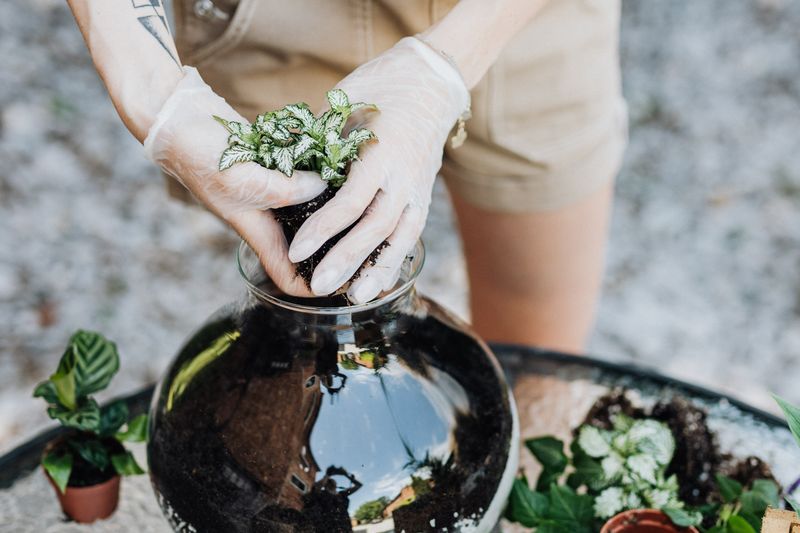
My closed terrarium was three weeks old when the white fuzz showed up. It crept along the soil surface, then took over a patch of moss, then started climbing the base of a small fern. Every few days I would wipe it away and every few days it came back, sometimes bigger. I was losing a war of attrition against a life form I could not see, in a jar I could not fully reach into, and each round of wiping left the substrate a little more disturbed than before.
What I did not understand at the time is that I was fighting a symptom with a rag while the actual cause sat in the soil doing exactly what a damp, sealed, organic box does. The fix was not to remove the mold. It was to add the right tiny animals that eat it, so the ecosystem could clean itself the way a real forest floor does.
Why This Happens
A closed terrarium is a permanently humid box full of dead plant matter and soil. That is a description of ideal mold habitat, and no amount of scrubbing changes the fact that the conditions are perfect for fungus. Mold spores are always present. They ride in on the moss, the soil, and the air. And in a warm, wet, still environment with decaying leaves to feed on, they will always find a foothold. You cannot sterilize your way out of it. You have to introduce something that eats it faster than it grows.
That is what a cleanup crew does. Springtails are tiny, wingless arthropods, you often get them by accident in good potting soil and never notice, and they graze on mold, fungal threads, and decaying organic film. Isopods, the little land crustaceans also called pill bugs and roly-polies, are the larger members of the crew; they process bigger pieces of dead plant matter, turning them into usable nutrients and keeping litter from accumulating into a mat. Together they reproduce, find the mold, and strip it down before it becomes a visible problem. In a closed system they are not a nice extra. They are the maintenance department.
The reason mold gets ahead in a beginner's terrarium is usually that there is no cleanup crew at all, or too few of them, or a substrate that is too wet and rich for them to keep up. Beginners then compound it by reacting wrong, drying the whole setup out or dosing it with something meant for houseplants, which either kills the plants or wipes out the very microfauna that would have fixed it. The goal is balance, and balance comes from putting the crew in and giving them a home worth living in.
What I Tried First — and Why It Didn't Work
My first move was wiping the mold off with a damp cloth every time I saw it. It came back within days every time, because I was removing a fruit and leaving the threads underneath, and disturbing the surface just mixed more spores around. Cleaning a living system like a kitchen counter does not work.
Then I panicked about moisture and left the lid cracked for a couple of days to dry things out. The mold slowed down, and so did every plant in the jar. The moss crispened, a fern browned, and the terrarium went from lush to sad. I had traded a cosmetic problem for real damage, which taught me fast that a closed terrarium is a humidity system and you do not fix its problems by starving it of humidity.
The third thing I almost did was buy an anti-fungal spray meant for potted plants. I read the label first, thankfully, and realized that in a sealed enclosure those products would also kill the springtails and any other beneficial microfauna. The exact things that keep real mold in check over the long term. I put the bottle down and went looking for the actual solution instead of a faster way to make the same mistake.
What Actually Worked
The change that fixed it was introducing a proper cleanup crew (a starter colony of springtails and isopods. And then giving them conditions worth living in. This is the part that feels counterintuitive: I stopped trying to remove life and started adding the right life. Within a couple of weeks of shaking in a starter culture of springtails and settling a few isopods onto the surface, the visible mold receded and stopped coming back. They did not need me to do anything. They just ate the problem, reproduced, and kept eating it. The ecosystem started running itself.)
For the crew to work, though, they need a real base to live in, which is where a layered terrarium kit earns its keep. The layering is not decoration. A drainage layer of pebbles at the bottom catches excess water so the soil never sits saturated, a barrier keeps soil out of that water, and the substrate blend above gives the springtails and isopods a home with the drainage and structure they need to thrive. Leaf litter on the surface feeds the isopods and gives the springtails cover. Once the base was right, the moisture stabilized into a light, even fog instead of a swamp, and both the plants and the crew settled in. My mistake before had been a wet, shallow, structureless soil that fed mold and gave the crew nowhere to live.
The last piece was patience and restraint. I stopped fussing, left the setup to cycle, and only stepped in to gently rebalance moisture when it drifted. A terrarium with a working cleanup crew needs less from its keeper, not more. I now check mine weekly, top up moisture sparingly, and let the tiny animals do the cleaning. The mold is a memory, and the setup has run largely on its own for well over a year.
Terrarium Kit with Live Moss & Springtails
The cleanup crew that eats mold and decaying matter so a closed terrarium self-regulates instead of fighting you.
Check price on AmazonGlass Terrarium with Drainage Layer
The layered base that gives the crew a home and stops the soil from sitting wet, the structure the mold was thriving without.
Check price on AmazonWhat I'd Tell Someone Starting Today
If you are building a closed terrarium, plan for a cleanup crew from the start rather than adding one after mold shows up. Build the base in layers (drainage, barrier, substrate, leaf litter (so moisture has somewhere to go and your springtails and isopods have somewhere to live. Keep the moisture at a light fog on the glass, not rain, and do not dry the whole jar out to fight a bit of fuzz, because you will hurt the plants far more than the mold. And never spray a houseplant fungicide into a sealed setup; it kills the crew that would have fixed the problem.))
The lesson that stuck with me is that a terrarium is not a thing you clean. It is a thing you stock and let run. Add the right small animals, give them a decent base, and the ecosystem does the maintenance you were trying to do by hand, better and permanently.
This post may contain affiliate links. If you buy through one of them, we earn a small commission at no extra cost to you.