
Fungus Gnats Took Over My Terrarium — Here's What Actually Got Rid of Them
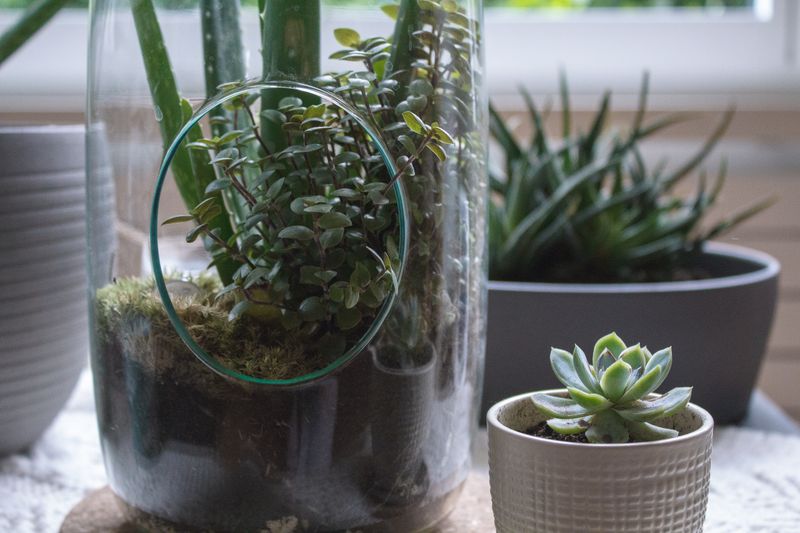
The first gnat I noticed was a single little fly drifting over my terrarium, and I shrugged it off. By the end of the week there were a dozen, then a small cloud, then gnats landing on my desk lamp, my coffee, my face. They were not biting anything. They were just everywhere, and the more I looked, the more I saw them rising off the soil every time I disturbed it. My pretty little ecosystem had become a breeding ground for a pest that multiplies faster than I could swat.
What frustrated me most was that everything I did seemed to make it worse or cost me a plant. Fungus gnats are a solvable problem, but only if you understand their lifecycle, because every ineffective fix I tried attacked the wrong stage of it and left the breeding population untouched.
Why This Happens
Fungus gnats are the small dark flies you see drifting around damp soil, and their whole life is tuned to wet, organic conditions. The adults you notice are the least of the problem. They live only briefly, but in that time they lay eggs in moist soil. And a terrarium is moist soil in a glass box. The eggs hatch into larvae, tiny translucent worms that live in the top layer of the substrate feeding on fungus, algae, and decomposing organic matter. Those larvae then pupate and emerge as new adults, and the cycle repeats every couple of weeks. If conditions stay damp, the population compounds.
The reason they show up so reliably in terrariums is that the environment is exactly their ideal: constant moisture, warm temperatures, and a steady supply of decaying plant matter. Overwatering is the single biggest driver, because a soggy, rich substrate is a nursery. And because gnats hitchhike in on soil and plants, it is rare for a terrarium to be truly free of them once conditions favor them.
The damage is often more than annoyance. The adults do not harm the animal directly, but a swarm is a sign of an over-wet substrate, which by itself can cause problems like root rot in your plants. The larvae feed mostly on fungus and decaying matter, but in a heavy infestation they can nibble fine roots and young seedlings, which shows up as plants that inexplicably fail to thrive. So gnats are both a symptom of a wet setup and a slow drain on the planting. Fixing the moisture and breaking the lifecycle is what actually solves it, and doing only one of those just resets the clock.
What I Tried First — and Why It Didn't Work
My first reaction was to dry the terrarium out. Crack the lid and let the substrate go dry to kill the larvae. It worked on the gnats and nearly killed the plants. The moss crisped, a fern browned, and the terrarium looked worse than before. Since a closed terrarium needs moisture by definition, drying it out is fighting the entire point of the build.
Then I hung a couple of sticky traps and felt victorious for a day as adults accumulated on them. Then I understood I was catching only the adults while the larvae kept hatching in the soil underneath. The traps were a scoreboard, not a solution, because the breeding population was never touched. The cloud came right back.
The third thing I tried was a general insecticide spray, which I stopped before using once I realized it was not labeled for enclosed reptile or plant setups and could hurt the animal or wipe out the cleanup crew. Poisoning a sealed micro-ecosystem is a bad trade for a nuisance pest, and I am glad I read the label before dosing my terrarium with something I could not easily rinse out.
What Actually Worked
The real fix had two halves, and the first was breaking the lifecycle with traps aimed at the adults so they could not keep laying eggs. Yellow sticky gnat traps do this without any chemicals in the substrate: the adults fly, land on the yellow card, and stay stuck, which steadily cuts the number of egg-layers. Inside an enclosure, these need to be the plant-safe kind meant for exactly this setting, not a household pest strip. Sticking a couple near the soil surface caught a surprising number of adults, and after a couple of weeks the constant cloud thinned out and mostly disappeared.
The second half was fixing the moisture that made the setup a nursery in the first place, because traps alone just fight a battle the wet soil keeps feeding. I stopped watering on a schedule and started judging by touch, letting the surface dry down between waterings, and I switched to bottom-moisture where possible so the top layer the larvae need stayed less consistently damp. A terrarium kit with a proper drainage layer helps enormously here, because water has somewhere to go instead of pooling in the root zone where gnats breed. I also cleared any decaying plant matter sitting on the surface, since that litter is exactly what the larvae graze on, and I let the cleanup crew of springtails do the rest, they compete with gnat larvae for the same food and keep the surface clean.
Between cutting off the adults and drying out the top layer, the cycle broke. It took a few weeks, not a few days, because I had to let each generation fail to produce the next. Once the substrate was not perpetually soupy and the adults could not lay, the gnats were gone and did not come back, and my plants looked healthier for the corrected moisture than they had in months.
Terrarium Kit with Live Moss & Springtails
Catches the egg-laying adults without putting any chemical into the substrate, the safe way to break the cycle inside an enclosure.
Check price on AmazonGlass Terrarium with Drainage Layer
Gives water somewhere to go so the top layer stops staying damp, the breeding condition you have to remove, not just the flies.
Check price on AmazonWhat I'd Tell Someone Starting Today
Attack both the adults and the wet soil, or you will lose. Use plant-safe yellow sticky traps to knock down the flying adults, and then fix the moisture, water by touch, keep the top layer from staying soggy, and use a drainage layer so water does not sit in the root zone. Clear decaying surface litter and let a cleanup crew do the tidying. Do not dry the terrarium out or spray insecticide into it, because you will hurt the plants and the microfauna far more than the gnats. Be patient: you have to starve the cycle through a couple of generations, and then it stays gone.
My terrarium is quiet again, no cloud over the moss, no gnats on my coffee. The trick was never the flies I could see. It was the wet soil I could not.
This post may contain affiliate links. If you buy through one of them, we earn a small commission at no extra cost to you.